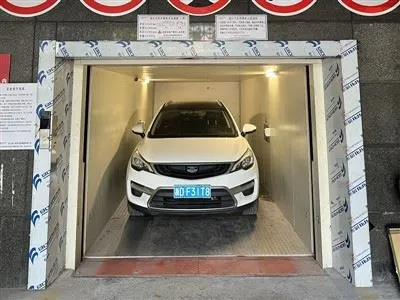
In the dynamic landscape of urban development, parking solutions have witnessed remarkable evolution. Among the innovative approaches, planar shuttle parking garages have emerged as a cutting - edge answer to the escalating demand for efficient parking spaces. As a supplier of planar shuttle parking garages, I am often confronted with a crucial question from potential clients: Are planar shuttle parking garages resistant to natural disasters?
Understanding Planar Shuttle Parking Garages
Before delving into the resilience of planar shuttle parking garages against natural disasters, it's essential to grasp the fundamental concept of these facilities. Planar shuttle parking garages are highly automated systems that use shuttles to transport vehicles to and from parking spots. These systems maximize space utilization, allowing a large number of vehicles to be parked in a relatively small area compared to traditional parking lots.
The technology behind planar shuttle parking garages is based on a combination of mechanical engineering, automation, and intelligent control systems. Shuttles move horizontally and vertically to access parking spaces, eliminating the need for drivers to navigate through narrow aisles, which not only saves time but also reduces the risk of vehicle collisions.
Resistance to Earthquakes
Earthquakes are one of the most destructive natural disasters, capable of causing significant damage to buildings and infrastructure. When considering the seismic resistance of planar shuttle parking garages, several factors come into play.
Firstly, the structural design of these garages is of utmost importance. Modern planar shuttle parking garages are engineered with seismic - resistant structures. They are built using high - strength steel and concrete materials that can withstand the lateral forces generated during an earthquake. The structural framework is designed to dissipate seismic energy, preventing excessive stress on the components of the parking system.
Secondly, the automation systems in planar shuttle parking garages are equipped with sensors and safety mechanisms. In the event of an earthquake, these sensors can detect the ground vibrations and immediately halt the operation of the shuttles. This prevents any potential damage to the vehicles and the parking equipment caused by the movement of shuttles during an unstable situation.
However, it's important to note that the level of seismic resistance can vary depending on the design and construction standards of the specific parking garage. In regions prone to high - magnitude earthquakes, more stringent design requirements are usually implemented. For example, some garages may be designed to withstand earthquakes of a certain intensity level, as specified by local building codes.
Resistance to Floods
Floods pose another significant threat to parking facilities. Planar shuttle parking garages can be designed to be resistant to floods to a certain extent.
One of the key strategies is elevation. By constructing the parking garage on an elevated platform, the risk of water inundation can be significantly reduced. Additionally, the electrical and mechanical components of the parking system are often installed in waterproof enclosures. This protects the sensitive automation equipment from water damage, ensuring that the system can resume normal operation after the floodwaters recede.
Moreover, drainage systems are an integral part of flood - resistant design. Adequate drainage channels are incorporated into the structure of the parking garage to quickly remove any water that may enter the facility. These drainage systems are designed to handle a certain volume of water flow, depending on the flood - prone nature of the area.
Despite these measures, in the case of extreme floods, some damage may still occur. For instance, if the floodwaters rise above the elevation of the parking garage or if the drainage system is overwhelmed, there could be water damage to the lower levels of the garage. However, compared to traditional parking lots, planar shuttle parking garages have better protection mechanisms in place.
Resistance to Hurricanes and High - Wind Events
Hurricanes and high - wind events can cause significant damage to buildings and infrastructure. Planar shuttle parking garages need to be designed to withstand the strong winds associated with these events.
The structural design of the garage plays a crucial role in wind resistance. The building envelope is designed to be aerodynamic, reducing the wind pressure on the structure. The use of high - strength materials and proper bracing systems helps to maintain the integrity of the garage during high - wind conditions.
In addition, the shuttles and other moving parts in the parking system are secured during high - wind events. The automation system is programmed to detect high - wind speeds and lock the shuttles in place to prevent them from being damaged by the wind.


However, the effectiveness of the wind - resistant design depends on the wind speed and the duration of the high - wind event. In some cases, where the wind is extremely strong, there may be some minor damage to the exterior components of the garage, such as signage or protective covers.
Advantages of Planar Shuttle Parking Garages in Disaster - Prone Areas
In disaster - prone areas, planar shuttle parking garages offer several advantages over traditional parking solutions.
One of the main advantages is space efficiency. In areas where land is limited, especially after a natural disaster when reconstruction is taking place, the ability to park a large number of vehicles in a small area is invaluable. Planar shuttle parking garages can be installed in compact spaces, allowing for more efficient use of available land.
For example, the Space - Efficient Lift Parking System is a prime example of a planar shuttle parking solution that maximizes space utilization. This system can be customized to fit different site requirements, making it suitable for various urban settings.
Another advantage is the protection of vehicles. During a natural disaster, vehicles parked in a planar shuttle parking garage are better protected compared to those parked in an open - air lot or a traditional parking structure. The automated system ensures that the vehicles are stored in a controlled environment, reducing the risk of damage from falling debris, floods, or high winds.
The Six - Level Lift - and - Sliding Parking Device is designed to provide a high - level of protection for vehicles. With multiple levels of parking, the vehicles are elevated and separated from potential sources of damage on the ground.
Case Studies
To illustrate the resilience of planar shuttle parking garages in real - world scenarios, let's look at a few case studies.
In an earthquake - prone region, a planar shuttle parking garage was built to serve a large commercial complex. The garage was designed to meet the strict seismic - resistant standards of the area. During a moderate earthquake, the sensors in the parking system detected the ground vibrations and immediately stopped the operation of the shuttles. The structural design of the garage effectively dissipated the seismic energy, and there was no significant damage to the parking equipment or the vehicles. After the earthquake, the garage was quickly inspected and resumed normal operation, demonstrating its ability to withstand seismic events.
In a coastal area prone to hurricanes, another planar shuttle parking garage was constructed. The garage was designed with a wind - resistant structure and had a system in place to secure the shuttles during high - wind events. During a major hurricane, the garage withstood the strong winds, and although there was some minor damage to the exterior signage, the parking system remained functional. The vehicles inside the garage were protected from the high - speed winds and flying debris.
Conclusion and Call to Action
In conclusion, planar shuttle parking garages are generally resistant to natural disasters when designed and constructed according to appropriate standards. Their advanced structural designs, automation systems, and safety mechanisms provide a high level of protection against earthquakes, floods, hurricanes, and high - wind events.
If you are in the process of planning a parking solution for your project, especially in a disaster - prone area, a planar shuttle parking garage could be the ideal choice. Our company offers a range of innovative planar shuttle parking solutions, including the Lift & Slide Parking Systems For Urban Street Projects.
We invite you to contact us for more information and to discuss your specific requirements. Our team of experts is ready to assist you in finding the best parking solution for your project. Whether you are a developer, a property owner, or a municipality, we can provide you with a customized plan that meets your needs and budget.
References
- "Seismic Design of Parking Structures", American Concrete Institute.
- "Flood - Resistant Design and Construction Guide", Federal Emergency Management Agency.
- "Wind - Resistant Design of Buildings", Structural Engineers Association of California.