



Turning Device
Comant: Your Professional Mechanical Parking System Manufacturer in China
Hangzhou Comant Intelligent Equipment Co., Ltd. is a state-controlled manufacturer specializing in the R&D and production of mechanical parking systems.
Backed by Zhejiang Topchance Group, Comant integrates intelligent design, precision manufacturing, and project-based delivery to provide reliable parking solutions for residential, commercial, and public buildings worldwide.
With over 80 core technologies and extensive project experience across China and overseas markets, Comant has become a trusted partner for developers, contractors, and parking solution providers.


Why choose us ?
High Quality Mechanical Parking Systems:All products are designed and manufactured under strict quality management systems, ensuring stable operation, structural safety, and long service life.
Advanced Equipment & Manufacturing Capability:Equipped with modern CNC machining centers, automated welding lines, and precision inspection tools to guarantee consistent product accuracy.
Professional Engineering Team:Our experienced R&D and engineering team provides structural optimization, layout planning, and customized parking solutions for complex projects.
Custom Service (ODM / OEM Accepted):Comant offers flexible customization based on site conditions, vehicle types, and local standards, supporting both ODM and OEM cooperation.
One-stop Parking Solution:From design consultation and manufacturing to installation guidance and after-sales support, we provide a complete turnkey service.
Competitive Price with Long Warranty:Optimized production processes and stable supply chains allow us to deliver cost-effective solutions with extended warranty support.
What is Mechanical Parking System?

A mechanical parking system is an automated or semi-automated vehicle storage solution that uses mechanical structures and control systems to maximize parking capacity within limited space.
Compared with traditional parking lots, it significantly improves land utilization while enhancing parking efficiency and safety.
Advantages of Mechanical Parking System
Space-Saving Design
Vertical lifting and horizontal movement allow multiple vehicles to be parked in the footprint of a single traditional space.
01
High Parking Efficiency
Automated operation reduces parking and retrieval time, improving overall traffic flow.
02
Flexible Layout Adaptation
Suitable for underground garages, narrow sites, irregular plots, and renovation projects.
03
Enhanced Safety
Equipped with multiple safety protection devices to prevent misoperation, overload, or unauthorized access.
04
Lower Long-Term Operating Cost
Reduced land usage and manpower requirements help decrease overall investment and operating expenses.
05
Types of Mechanical Parking Systems
According to structure and operation mode, mechanical parking systems mainly include:
Turning Device
What is Turning Device?
A turning device, also known as a vehicle turntable, is a rotating platform that is designed to allow vehicles to turn around within a limited space. Most suitable for the ares which has no sufficient space to turn the vehicle. It is commonly used in situations where it is difficult or impossible to reverse a vehicle out of a confined area, such as in narrow driveways, car showrooms, parking garages, and car washes.
What are features of Turning Device?
Creates Additional Space: If you have multiple cars and limited parking space, consider a car turntable for easy management. No need to sacrifice your backyard or garden. With a turntable, park one car, rotate, and park the next without maneuvering. This space-saving solution offers flexibility for other garage functions.
Security and Safety: Lack of space in your garage may force you to park your car on the streets, which is not secure. Your vehicle can also be hit by other cars when parked on the streets. That’s why it is essential to install a car turntable. In the other hand, reduce accidents during reverse parking, protecting against potential harm to children and pets.
Increases Property Value: A turntable is a valuable feature in a home. It is also user-friendly, and homebuyers are considering properties with turntables. That means properties with turntables are considered more valuable and preferred by clients.

Types of Turning Device
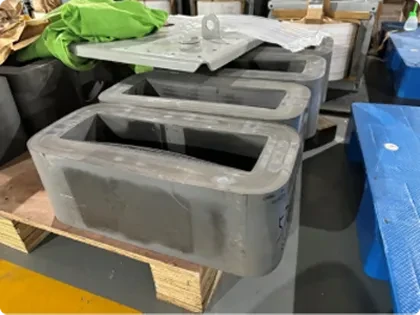
In-Ground Turning Device: Installed flush with the driveway/garage floor for a seamless look, requiring excavation.
Above-Ground Turning Device: Placed on top of existing concrete, requiring no excavation, and often used for quicker installation or temporary setups.
Motorized (Electric) Turning Device: Feature automatic rotation via motor, often with remote controls and high weight capacity for SUVs.
Manual Turning Device: Rotated by human force, suitable for lighter vehicles and lower-frequency use.
Portable Turning Device: Designed for easy transport, often used for auto shows or for temporary, flexible setups.
Material of Turning Device
Steel Plate (Standard/Diamond Tread): The most common, durable material for heavy-duty, high-load, and long-life requirements.
Aluminum Alloy: Used for its lightweight properties and corrosion resistance.
Hot-Dip Galvanized Coating: Applied to steel for superior weather resistance and durability, especially for outdoor installations.
Concrete/Pavers/Tiles: Some platforms feature a shallow "tray" design allowing the surface to be finished with concrete, bricks, or pavers to seamlessly blend with the existing driveway.
Anti-Slip Coatings: High-friction coatings are applied to ensure tire grip on the surface.
Himor lift +6
Structure: Comprised of a fan-shaped steel frame designed for high load-bearing capacity.
Mechanism: Uses high-load radial bearings for smooth, quiet, and reliable operation.
Drive System: Often powered by electrical gearmotors or hydraulic systems utilizing pin-gear technology.
Application of Turning Device
Driveways: Avoid Reversing in Tight or Busy Spaces
Got a narrow or steep driveway with limited visibility? A Turning Device lets you enter and exit facing forward—no reversing into traffic, no awkward turns. It’s especially helpful for urban homes or those on busy roads.
01
Garages: Make the Most of Limited Space
In small garages, turning a car around can be a hassle (or impossible). A Turning Device rotates your car in place, maximizing your space and making parking stress-free.
02
Dealerships: Present Vehicles from Every Angle
Turning Devices transform how cars are presented on the lot. With 360° viewing, customers get a complete look at a vehicle without the need for staff to reposition it.
03
Car Shows: Add Motion to Your Display
Add motion to your display and instantly grab attention. A rotating vehicle elevates the visual appeal and highlights every angle of the design.
04
Photobooths: Rotate Cars for Seamless Shooting
For automotive photographers, consistency and precision are everything. A Turning Device provides smooth, even movement, helping capture perfect shots from every angle—without moving your tripod.
05
Process of Turning Device
Design & Engineering: Engineers create detailed drawings and structural calculations based on load capacity and size requirements.
Material Preparation & Fabrication: Steel tubes and plates are cut and welded to form the structural frame. Shot blasting is used to prepare the surface, often followed by electrophoresis for rust protection.
Component Assembly: The structural steel is assembled, and the rotating mechanism—typically an inner ring bearing or rollers—is installed.
Driving System Integration: A motor, drive chain, or friction drive system is integrated to power the rotation, often utilizing a PLC (Programmable Logic Controller) for control.
Surface Finishing: The top surface is covered with materials like checkered steel or aluminum plate for traction.
Testing & Quality Control: The unit undergoes thorough no-load and full-load tests to check for smooth rotation, speed, and safety.

Components of Turning Device
Base Frame: The base frame of a vehicle turntable is the foundation upon which all other components are built. It provides structural support for the entire turntable mechanism and ensures that the turntable can bear the weight of the vehicle being rotated.
Rotating Platform
The rotating platform: It is the part of the turntable where the vehicle rests. This platform rotates to turn the vehicle into the desired position. The platform needs to be designed for both durability and smooth rotation, as it will constantly support the vehicle’s weight while spinning.
Drive System
The drive system: It is the heart of the vehicle turntable, providing the torque necessary to rotate the platform. This system ensures that the turntable operates efficiently and can handle the weight of vehicles without failure.
Tilt Mechanism (Optional): Some vehicle turntables are equipped with a tilt mechanism, which allows the platform to tilt slightly. This feature is particularly useful in situations where the turntable is installed in tight spaces or sloped driveways.
Bearing and Support System: The bearing and support system ensures the smooth rotation of the platform and distributes the weight of the vehicle evenly. This component is essential for the longevity and efficiency of the turntable.
Control System: The control system is responsible for the safe operation of the turntable. Modern vehicle turntables often come with advanced control systems that allow users to easily start, stop, and control the rotation of the platform.
Safety Features: Safety is a critical aspect of vehicle turntables; given that they deal with heavy vehicles in confined spaces. Several safety features are typically included in the design of a turntable to protect both the vehicle and the user.
Maintenance Tips for Turning Device
Keep Wheels and Rails Clean:Please be sure the wheels and rails are clean, or there will be noise during turntable running.
Inspect Control Box Wiring Regularly:Kindly check if the control box wiring loosing or aging every 6 months.
Verify Auxiliary Wheel Function:Check if each auxiliary wheels working well, please note some auxiliary wheels may not touch the rails when empty turning due to the motor wheels support on the rails, it is normal, and auxiliary wheel will also touch on the rails when car loading.


Monitor Motor Condition:Check if each motor working condition, not vibrative or noisy, check every 6 months.
Check and Tighten Structural Bolts:Check if the bolts on structure or platform loose or not, please tighten the screws.
Assess Auxiliary Wheel Wear:Check if the auxiliary wheels has any abrasion, please replace the new one for heavily abraded wheels.
How to cooperate with us?
Project Overview
Please give us the name, location and a brief description of the project.
Site Specifications & Constraints
Please provide the dimensions of the buildable area including available height above grade and/or below grade. Let us know whether the measurement is in ft. x ft. or m x m. Please list any height or property restrictions.
Parking Capacity & Traffic Demand
How many parking spaces are you looking to create and what is the expected peak traffic per hour?
Professional Installation
Our team can offer installation abroad. Morever, they will introduce you the maintenance and cleaning methods for automated parking systems.
Company Certificate

FAQ
1. What types of vehicles can a mechanical parking system accommodate?
Mechanical parking systems accommodate a wide range of standard cars, SUVs, and even electric vehicles, with customization options for extra-large truck.
2.How much space can be saved compared to traditional parking?
Automated parking systems can save significant space, often reducing the footprint by 30% to 60% compared to traditional parking, primarily by eliminating ramps, drive aisles, and pedestrian walkways, allowing for denser stacking and vertical storage, effectively fitting twice as many cars in the same area for better urban land use.
3.Is customization available for different site conditions?
Yes, automated parking systems are highly customizable. Providers can tailor solutions based on specific building dimensions, spatial configurations (underground/surface), capacity requirements, and unique functional needs, such as Automated Guided Vehicles (AGVs) and entrance/exit rotating platforms, to optimize space utilization and meet unique project demands.
4.What safety measures are included in the system?
A robust safety system includes hazard identification, risk assessment, and control measures (like PPE, training, engineering controls), supported by management commitment, worker participation, clear communication, and emergency planning, all monitored through audits and incident reporting for continuous improvement, following principles like OSHA's core elements.
5.How long is the warranty period?
Comant offers a 2-year warranty for components, while the main steel structure is eligible for an extended warranty of up to 20 years.
6.How long does installation usually take?
The installation period for automated parking systems varies significantly depending on the system's complexity and the number of parking spaces, typically ranging from several weeks to several months:
For parking equipment such as Simple Lift, Lift & Slide, and Vertical Carousel systems with up to 100 spaces, on-site installation and commissioning require approximately one month.
For fully automated multi-level garages such as Horizontal Shuttle, Vertical Lift, and Stacker systems with up to 100 spaces, on-site installation and commissioning require approximately two months.
7.Is overseas installation guidance available?
Yes, overseas installation guidance for automated parking systems is available, with offering remote diagnostics, support and sometimes on-site teams.
8.What power supply is required for mechanical parking systems?
Mechanical parking systems require a stable and independent power supply. A three-phase AC power supply (380V or 220V, 50Hz or 60Hz) is typically used to drive motors and control units.
9.Can the system be installed in underground garages?
Yes, many systems can be installed in underground garages, but they often require specialized solutions, especially for things like cellular signals or ventilation, due to concrete and rebar blocking signals and toxic fumes building up. Common systems installed include gas detection, ventilation, smart parking, ANPR (Automatic Number-Plate Recognition) for access, fire suppression (sprinklers), and cellular repeaters.
10.How reliable is the system for long-term operation?
Automated Parking Systems are designed for high reliability in long-term operation through robust hardware, redundant systems (like backup servers & power), and sophisticated software, minimizing failures and ensuring vehicle retrieval, though they require consistent, specialized maintenance and depend on stable power, with high initial costs balanced by long-term operational savings. Key to their success are fault-tolerant servers, off-the-shelf components, and backup power, ensuring high uptime and safety despite inherent technological dependence.
11.What kind of maintenance is required?
Automated parking system maintenance involves regular inspections, lubrication, and cleaning of mechanical parts (motors, cables, gears, rails) and electrical systems (sensors, wiring, control panels), plus critical software updates, safety system calibration, and structural checks, all to ensure smooth, reliable operation and prevent costly breakdowns through both routine preventive care and emergency support.
12.Is operator training provided?
Yes. Operator training for Automated Parking Systems is crucial, covering implementation and ongoing operations, with structured content for different project needs, ensuring efficient management of these complex mechanical systems through methods like phased training, competency matrices, and specific skill development for diverse models, focusing on system handling, maintenance, and troubleshooting.
13.What happens in case of power failure?
To address concerns about power outages, building owners can install backup power supplies (such as generators, battery storage systems, or solar power systems) near the equipment to ensure uninterrupted operation. Alternatively, vehicle access and retrieval can be managed through manual operation interfaces and software resets, with remote assistance support provided by Comant throughout the process.
14.Are mechanical parking systems noisy during operation?
Yes, mechanical parking systems do generate noise, but modern designs aim to keep it low, often just a few decibels above ambient levels, with rotary systems generally quieter than other types, though some older or complex systems might be noisier and require noise control. The main sounds come from motors, hydraulics, and moving parts, but effective engineering and design can mitigate this, reducing overall traffic noise and vibrations in buildings.
15.How does a mechanical parking system improve parking safety?
Mechanical parking systems boost safety by removing pedestrians from vehicle areas, drastically cutting accidents and liability, while also protecting cars from theft, vandalism, and damage through controlled access and enclosed storage, eliminating driver errors like door dings and collisions in tight spaces. These systems reduce traffic, provide better lighting, and create a more secure, monitored environment, reducing risks for both drivers and their vehicles compared to traditional lots.
16.Can the system be expanded in the future?
Yes, automated parking systems (APS) are expected to expand significantly, driven by urbanization, smart city initiatives, and advancements in AI and autonomous vehicles (AVs), allowing for greater space efficiency, integration with city infrastructure, and a shift towards managing vehicles remotely. Future growth involves deeper integration with AVs, predictive AI, enhanced IoT connectivity, and potentially repurposing traditional structures, making them a key part of sustainable urban mobility.
17. What standards and certifications do your products comply with?
Our company holds 80+ patents, with three core products (Puzzle Parking, Simple Lift, and Vertical Carousel systems) certified under the EU's CE Directivefor safety and compliance. We further adhere to international management standards, including ISO 9001 (Quality), ISO 14001 (Environmental), ISO 45001 (Occupational Health & Safety), and ISO/IEC 20000 (IT Service Management), ensuring reliability across all operations. These certifications reflect our commitment to delivering innovative, compliant, and sustainable parking solutions.
18. How long is the service life of a mechanical parking system?
The service life of a mechanical parking system varies, but with proper maintenance, high-quality units can last 30 years or more, with some systems exceeding 35 years, significantly longer than traditional garages. Lifespans depend heavily on usage, regular maintenance (minor & major), environmental conditions, and the quality of components.
19. How is after-sales service handled?
After-sales service for automated parking systems combines 24/7 remote support (video/audio calls, remote diagnostics) for user issues with proactive, scheduled maintenance (lubrication, inspections) performed by trained technicians, often under long-term contracts, ensuring system uptime and covering common repairs like sensor or hydraulic seal replacements, with comprehensive manuals provided for onsite staff training.
20. How do I start a mechanical parking project with Comant?
To start a mechanical parking project, begin with consultation to define goals and site specifics, move to planning & design (capacity, flow, tech), then engineering & manufacturing, followed by installation and finally commissioning & testing before launch, focusing on regulations, user experience, and system reliability. We offer free design studies.