



Carousel Parking
Comant: Your Professional Mechanical Parking System Manufacturer in China
Hangzhou Comant Intelligent Equipment Co., Ltd. is a state-controlled manufacturer specializing in the R&D and production of mechanical parking systems.
Backed by Zhejiang Topchance Group, Comant integrates intelligent design, precision manufacturing, and project-based delivery to provide reliable parking solutions for residential, commercial, and public buildings worldwide.
With over 80 core technologies and extensive project experience across China and overseas markets, Comant has become a trusted partner for developers, contractors, and parking solution providers.


Why choose us ?
High Quality Mechanical Parking Systems:All products are designed and manufactured under strict quality management systems, ensuring stable operation, structural safety, and long service life.
Advanced Equipment & Manufacturing Capability:Equipped with modern CNC machining centers, automated welding lines, and precision inspection tools to guarantee consistent product accuracy.
Professional Engineering Team:Our experienced R&D and engineering team provides structural optimization, layout planning, and customized parking solutions for complex projects.
Custom Service (ODM / OEM Accepted):Comant offers flexible customization based on site conditions, vehicle types, and local standards, supporting both ODM and OEM cooperation.
One-stop Parking Solution:From design consultation and manufacturing to installation guidance and after-sales support, we provide a complete turnkey service.
Competitive Price with Long Warranty:Optimized production processes and stable supply chains allow us to deliver cost-effective solutions with extended warranty support.
What is Mechanical Parking System?

A mechanical parking system is an automated or semi-automated vehicle storage solution that uses mechanical structures and control systems to maximize parking capacity within limited space.
Compared with traditional parking lots, it significantly improves land utilization while enhancing parking efficiency and safety.
Advantages of Mechanical Parking System
Space-Saving Design
Vertical lifting and horizontal movement allow multiple vehicles to be parked in the footprint of a single traditional space.
01
High Parking Efficiency
Automated operation reduces parking and retrieval time, improving overall traffic flow.
02
Flexible Layout Adaptation
Suitable for underground garages, narrow sites, irregular plots, and renovation projects.
03
Enhanced Safety
Equipped with multiple safety protection devices to prevent misoperation, overload, or unauthorized access.
04
Lower Long-Term Operating Cost
Reduced land usage and manpower requirements help decrease overall investment and operating expenses.
05
Types of Mechanical Parking Systems
According to structure and operation mode, mechanical parking systems mainly include:
Carousel Parking
What is Carousel Parking?
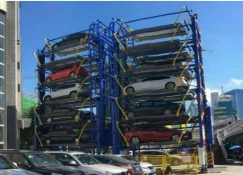
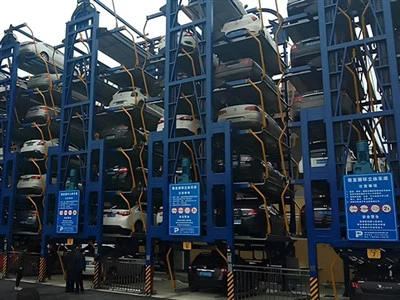
Carousel parking, or a vertical rotary parking system, is an automated, high-density parking solution that rotates vehicles vertically in a Ferris wheel-like motion to maximize space. It can fit up to 16–20 cars or SUVs in the footprint of only two conventional spaces. It requires no attendants, offering quick, user-friendly, and secure, independent parking via keyfob, PIN, or app.
What are features of Carousel Parking?
Environmentally Friendly: Less pollution, no exhaust fumes from driving up and down aisles and ramps looking for a spot.
Lower Construction Costs: Less excavation costs and reduced floor slabs.
Land Savings: Automated parking systems use 30-70% less land than a conventional garage.
Low Maintenance: Operating costs are low and it requires less energy to run, typically ~1 kW per cycle.
Features and Benefits / Increased Rentable Areas: Gain back real estate for rentable areas or other amenities by using only half the space.
Types of Carousel Parking
Multi-Tier Carousel Parking System adopts the car-carrying plate circulating to move up and down to storage vehicles on multi levels. so as to reduce the floor space and improve the automatic degree of car access. . This kind of garage does not need a ramp, saves land, has automatic access, is convenient and fast, and has wide applicability.
Vertical Carousel Parking System is a parking system that uses a circular motion perpendicular to the ground to parking and retrieve vehicles. Its working principle is to drive the transmission mechanism through the geared motor, and install a storage trailer pallet at a certain distance on the traction component-the chain, and the storage trailer pallet circulates along with the chain to achieve the purpose of parking and retrieve the vehicle.
Material of Carousel Parking

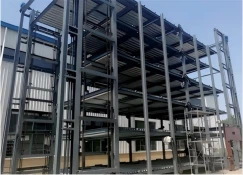
Carousel Parking, often used in high-density automated car storage, are typically constructed using heavy-duty, galvanized steel for the structural frame and car platforms. These systems are engineered for durability, sometimes featuring hot-dipped zinc coatings to ensure longevity and prevent rust.
Structure: Primarily galvanized steel for robust support.
Platforms: Constructed with durable steel to hold vehicles securely.
Finish: Often hot-dipped zinc for corrosion resistance.
Drive Systems: Powered by electric motors or hydraulic pumps to facilitate rotation.
Application of Carousel Parking
-
Densely Populated Urban Areas: Ideal for cities like New York, where land is scarce and expensive, providing a 30-70% reduction in land usage compared to traditional parking garages. Mixed-Use & Commercial Developments: Used by property managers to maximize parking capacity in small, unconventional, or narrow spaces.
EV-Ready Infrastructure: Modern carousel systems are designed to include EV charging for every spot, supporting the rise of electric vehicles in constrained spaces.
Small Footprint Operations: Suitable for residential buildings, car dealerships, and office buildings where space for parking ramps and aisles is not available.

Process of Carousel Parking
Design & Engineering: Customized layouts are created based on site constraints to maximize space, often allowing 14-16 vehicles in the space of two, utilizing CAD software to plan the structure.
Fabrication of Components: High-grade steel is used for the main structure. Techniques include cutting, bending, and punching using CNC machinery to achieve 0.02mm accuracy.
Welding and Structure Assembly: Robotic welding machines are employed to ensure structural integrity and reduce deformation when assembling the main frame and car carriers (pallets).
Drive System Installation: A heavy-duty motor, reducer, and chain mechanism are installed to drive the rotary motion. The central column is erected, which supports the entire rotating mechanism.
Electrical & Control Systems: Programmable Logic Controllers (PLCs) and sensors are installed to manage the rotation, parking, and retrieval processes safely, including safety features like photo sensors and emergency stops.
Finishing & Coating: Components are treated, usually by hot-dip galvanizing or specialized painting, to prevent corrosion, especially for outdoor installations.
Testing & Commissioning: Before final deployment, the system undergoes rigorous testing for load capacity, rotational speed, safety, and operational precision.
Components of Carousel Parking
Structure & Frame: The main, tower-like vertical steel structure that supports the entire weight of the cars and machinery.
Pallets (Carriers): Individual platforms or cradles designed to hold the car, ensuring it remains level while rotating.
Drive System (Motor/Gear System): A powerful motor and reduction unit (sometimes hydraulic) that rotates the chain system, moving cars up, down, and around.


Conveying Mechanism (Traction Chain): Heavy-duty chains that connect to the pallets, enabling the vertical circulation.
Control Panel/Interface: An user-friendly operator console (touchscreen, keypad, or RFID card) for summoning or parking vehicles.
Safety & Sensor Systems: Crucial components including photoelectric sensors to detect proper vehicle positioning, emergency stop buttons, and anti-fall safety locks.
Entry/Exit Bay: A ground-level, often covered, area where the driver parks the car before the system takes over.
Maintenance Tips for Carousel Parking
Dedicated Circuit: Ensure the carousel parking system is on a dedicated electrical circuit, isolated from other heavy machinery or fluctuating loads.
Proper Sizing: Confirm that the main feeder cables, circuit breakers, and any transformers are correctly sized for the full load requirements of the parking system.
Regular Inspections: Periodically inspect all electrical connections for tightness, corrosion, and wear. Loose connections generate heat and resistance.
Surge Protection: Install surge protection devices to guard against voltage spikes caused by lightning or other electrical events.
Grounding Integrity: Regularly verify the integrity of the system's grounding to protect against faults and improve noise immunity.
Monitor for Overloads: Be vigilant for signs of mechanical binding or motor strain that could lead to excessive current draw and stress on the power supply.
Professional Electrical Audit: Consider a periodic electrical audit by a qualified electrician to assess the overall power quality at your facility.

How to cooperate with us?
Project Overview
Please give us the name, location and a brief description of the project.
Site Specifications & Constraints
Please provide the dimensions of the buildable area including available height above grade and/or below grade. Let us know whether the measurement is in ft. x ft. or m x m. Please list any height or property restrictions.
Parking Capacity & Traffic Demand
How many parking spaces are you looking to create and what is the expected peak traffic per hour?
Professional Installation
Our team can offer installation abroad. Morever, they will introduce you the maintenance and cleaning methods for automated parking systems.
Company Certificate

FAQ
1. What types of vehicles can a mechanical parking system accommodate?
Mechanical parking systems accommodate a wide range of standard cars, SUVs, and even electric vehicles, with customization options for extra-large truck.
2.How much space can be saved compared to traditional parking?
Automated parking systems can save significant space, often reducing the footprint by 30% to 60% compared to traditional parking, primarily by eliminating ramps, drive aisles, and pedestrian walkways, allowing for denser stacking and vertical storage, effectively fitting twice as many cars in the same area for better urban land use.
3.Is customization available for different site conditions?
Yes, automated parking systems are highly customizable. Providers can tailor solutions based on specific building dimensions, spatial configurations (underground/surface), capacity requirements, and unique functional needs, such as Automated Guided Vehicles (AGVs) and entrance/exit rotating platforms, to optimize space utilization and meet unique project demands.
4.What safety measures are included in the system?
A robust safety system includes hazard identification, risk assessment, and control measures (like PPE, training, engineering controls), supported by management commitment, worker participation, clear communication, and emergency planning, all monitored through audits and incident reporting for continuous improvement, following principles like OSHA's core elements.
5.How long is the warranty period?
Comant offers a 2-year warranty for components, while the main steel structure is eligible for an extended warranty of up to 20 years.
6.How long does installation usually take?
The installation period for automated parking systems varies significantly depending on the system's complexity and the number of parking spaces, typically ranging from several weeks to several months:
For parking equipment such as Simple Lift, Lift & Slide, and Vertical Carousel systems with up to 100 spaces, on-site installation and commissioning require approximately one month.
For fully automated multi-level garages such as Horizontal Shuttle, Vertical Lift, and Stacker systems with up to 100 spaces, on-site installation and commissioning require approximately two months.
7.Is overseas installation guidance available?
Yes, overseas installation guidance for automated parking systems is available, with offering remote diagnostics, support and sometimes on-site teams.
8.What power supply is required for mechanical parking systems?
Mechanical parking systems require a stable and independent power supply. A three-phase AC power supply (380V or 220V, 50Hz or 60Hz) is typically used to drive motors and control units.
9.Can the system be installed in underground garages?
Yes, many systems can be installed in underground garages, but they often require specialized solutions, especially for things like cellular signals or ventilation, due to concrete and rebar blocking signals and toxic fumes building up. Common systems installed include gas detection, ventilation, smart parking, ANPR (Automatic Number-Plate Recognition) for access, fire suppression (sprinklers), and cellular repeaters.
10.How reliable is the system for long-term operation?
Automated Parking Systems are designed for high reliability in long-term operation through robust hardware, redundant systems (like backup servers & power), and sophisticated software, minimizing failures and ensuring vehicle retrieval, though they require consistent, specialized maintenance and depend on stable power, with high initial costs balanced by long-term operational savings. Key to their success are fault-tolerant servers, off-the-shelf components, and backup power, ensuring high uptime and safety despite inherent technological dependence.
11.What kind of maintenance is required?
Automated parking system maintenance involves regular inspections, lubrication, and cleaning of mechanical parts (motors, cables, gears, rails) and electrical systems (sensors, wiring, control panels), plus critical software updates, safety system calibration, and structural checks, all to ensure smooth, reliable operation and prevent costly breakdowns through both routine preventive care and emergency support.
12.Is operator training provided?
Yes. Operator training for Automated Parking Systems is crucial, covering implementation and ongoing operations, with structured content for different project needs, ensuring efficient management of these complex mechanical systems through methods like phased training, competency matrices, and specific skill development for diverse models, focusing on system handling, maintenance, and troubleshooting.
13.What happens in case of power failure?
To address concerns about power outages, building owners can install backup power supplies (such as generators, battery storage systems, or solar power systems) near the equipment to ensure uninterrupted operation. Alternatively, vehicle access and retrieval can be managed through manual operation interfaces and software resets, with remote assistance support provided by Comant throughout the process.
14.Are mechanical parking systems noisy during operation?
Yes, mechanical parking systems do generate noise, but modern designs aim to keep it low, often just a few decibels above ambient levels, with rotary systems generally quieter than other types, though some older or complex systems might be noisier and require noise control. The main sounds come from motors, hydraulics, and moving parts, but effective engineering and design can mitigate this, reducing overall traffic noise and vibrations in buildings.
15.How does a mechanical parking system improve parking safety?
Mechanical parking systems boost safety by removing pedestrians from vehicle areas, drastically cutting accidents and liability, while also protecting cars from theft, vandalism, and damage through controlled access and enclosed storage, eliminating driver errors like door dings and collisions in tight spaces. These systems reduce traffic, provide better lighting, and create a more secure, monitored environment, reducing risks for both drivers and their vehicles compared to traditional lots.
16.Can the system be expanded in the future?
Yes, automated parking systems (APS) are expected to expand significantly, driven by urbanization, smart city initiatives, and advancements in AI and autonomous vehicles (AVs), allowing for greater space efficiency, integration with city infrastructure, and a shift towards managing vehicles remotely. Future growth involves deeper integration with AVs, predictive AI, enhanced IoT connectivity, and potentially repurposing traditional structures, making them a key part of sustainable urban mobility.
17. What standards and certifications do your products comply with?
Our company holds 80+ patents, with three core products (Puzzle Parking, Simple Lift, and Vertical Carousel systems) certified under the EU's CE Directivefor safety and compliance. We further adhere to international management standards, including ISO 9001 (Quality), ISO 14001 (Environmental), ISO 45001 (Occupational Health & Safety), and ISO/IEC 20000 (IT Service Management), ensuring reliability across all operations. These certifications reflect our commitment to delivering innovative, compliant, and sustainable parking solutions.
18. How long is the service life of a mechanical parking system?
The service life of a mechanical parking system varies, but with proper maintenance, high-quality units can last 30 years or more, with some systems exceeding 35 years, significantly longer than traditional garages. Lifespans depend heavily on usage, regular maintenance (minor & major), environmental conditions, and the quality of components.
19. How is after-sales service handled?
After-sales service for automated parking systems combines 24/7 remote support (video/audio calls, remote diagnostics) for user issues with proactive, scheduled maintenance (lubrication, inspections) performed by trained technicians, often under long-term contracts, ensuring system uptime and covering common repairs like sensor or hydraulic seal replacements, with comprehensive manuals provided for onsite staff training.
20. How do I start a mechanical parking project with Comant?
To start a mechanical parking project, begin with consultation to define goals and site specifics, move to planning & design (capacity, flow, tech), then engineering & manufacturing, followed by installation and finally commissioning & testing before launch, focusing on regulations, user experience, and system reliability. We offer free design studies.