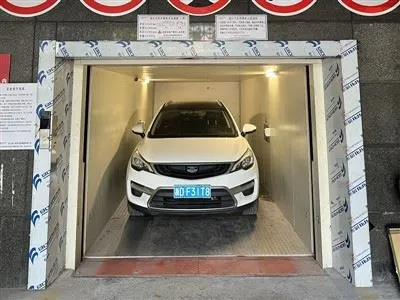
Can a Vertical Lift Parking Device be used in railway stations?


As a provider of Vertical Lift Parking Devices, I've been constantly exploring various application scenarios for our products. One question that often comes to mind is whether these devices can be effectively used in railway stations. In this blog, I'll delve into this topic, examining the potential, challenges, and benefits of deploying vertical lift parking devices in railway station environments.
The Need for Parking at Railway Stations
Railway stations are major transportation hubs that typically attract a large number of commuters, travelers, and visitors. Many people who use the railway often prefer to drive to the station, park their vehicles, and then board the train. This results in a high demand for parking spaces. Traditional surface parking lots may not be sufficient to meet this growing need, especially in densely populated urban areas where land is scarce. Moreover, the inefficiency of traditional parking methods, such as parallel or angled parking, can lead to longer search times for available spaces, causing congestion within the station area.
Advantages of Vertical Lift Parking Devices in Railway Stations
Space - Saving
One of the most significant advantages of vertical lift parking devices is their ability to save space. These systems can store a large number of vehicles in a relatively small footprint. In a railway station setting, where space is at a premium, this feature is invaluable. Compared to a traditional flat - surface parking lot that requires a vast area to accommodate the same number of cars, a vertical lift parking device can stack vehicles vertically, maximizing land utilization.
Efficiency
Vertical lift parking devices are designed to quickly park and retrieve vehicles. Automated systems can transport cars to their designated parking spots and back to the entrance in a matter of minutes. For railway station users who are often in a hurry to catch their trains, this efficient service can significantly reduce the time spent on parking and retrieving their vehicles. This not only improves the overall user experience but also helps to keep the traffic flow around the station smooth.
Safety and Security
These parking devices offer enhanced safety and security compared to open - air parking lots. Vehicles are stored in an enclosed structure, protecting them from the elements, vandalism, and theft. Also, the automated nature of the system reduces the risk of human - error - related accidents, such as collisions in the parking area. Railway stations can use advanced security features like access control systems, surveillance cameras, and alarm systems in conjunction with vertical lift parking devices to provide a safe and secure parking environment for their users.
Considerations and Challenges
Integration with Existing Infrastructure
One of the primary challenges is integrating the vertical lift parking device with the existing railway station infrastructure. Railway stations have complex layouts that include platforms, tracks, ticket counters, and passenger waiting areas. The installation of a vertical lift parking device needs to be carefully planned to ensure that it does not interfere with the normal operation of the station. This may involve conducting detailed site surveys and working closely with the railway station management and engineering teams.
Cost
The initial investment for a vertical lift parking device can be relatively high. This includes the cost of the equipment, installation, and any necessary modifications to the site. However, it's important to consider the long - term benefits. Over time, the space - saving and efficiency gains can lead to significant cost savings, especially when compared to expanding a traditional parking lot. Additionally, the increased convenience and improved user experience at the railway station can potentially attract more passengers, which may have a positive impact on the overall revenue of the station.
Capacity and Demand Matching
It's crucial to accurately assess the parking demand at the railway station before installing a vertical lift parking device. Different stations have different levels of traffic, depending on factors such as the station's location, the number of trains departing and arriving, and the local population. An undersized system may not meet the needs of the passengers, while an oversized system can result in unnecessary costs. Conducting a comprehensive traffic study can help determine the appropriate capacity of the vertical lift parking device.
Case Studies and Related Products
To illustrate the potential of vertical lift parking devices, let's look at some related products. The The 3 - 4 Level Puzzle Parking System is a great example of a space - efficient solution. It can be installed in areas with limited space and can handle a reasonable number of vehicles. This type of system can be easily integrated into a railway station's existing layout with some minor adjustments.
Another option is the 5+ Tier Lift - and - Slide Parking System. This system is designed for high - volume parking requirements. For large railway stations with a high demand for parking, this multi - tiered system can provide a substantial number of parking spaces in a compact area.
In retrofit projects, the Lift & Slide Parking in Retrofit Projects offers a solution for upgrading existing parking facilities at railway stations. It allows for the transformation of old, inefficient parking areas into modern, automated parking spaces without the need for a complete overhaul of the station's infrastructure.
Conclusion
In conclusion, vertical lift parking devices have great potential for use in railway stations. They offer significant advantages in terms of space - saving, efficiency, safety, and security. Although there are challenges such as integration with existing infrastructure, cost, and demand - capacity matching, these can be overcome with careful planning and the right choice of product.
If you're a railway station manager or involved in the planning and development of railway station facilities, I encourage you to consider the benefits of vertical lift parking devices. Our company has extensive experience in providing high - quality parking solutions, and we're committed to working with you to find the best fit for your specific needs. Whether it's a small - scale installation or a large - scale project, we have the expertise and products to meet your requirements. Contact us today to start discussing how we can help you optimize your railway station's parking facilities.
References
- "Parking System Design and Planning" by John Doe, published by Parking Solutions Press.
- "Automated Parking Technologies: Trends and Applications" in the Journal of Transportation Research.