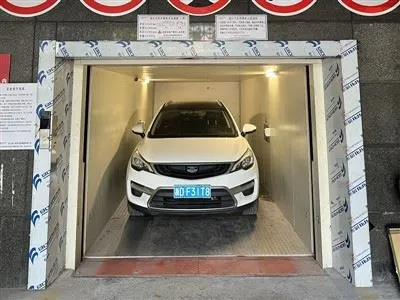
Hey there! I'm a supplier of Plate - Type Planar Shuttle Technology, and I've been thinking a lot lately about whether this tech can be used for lunar missions. It's a wild idea, but let's dig into it and see if there's any merit.

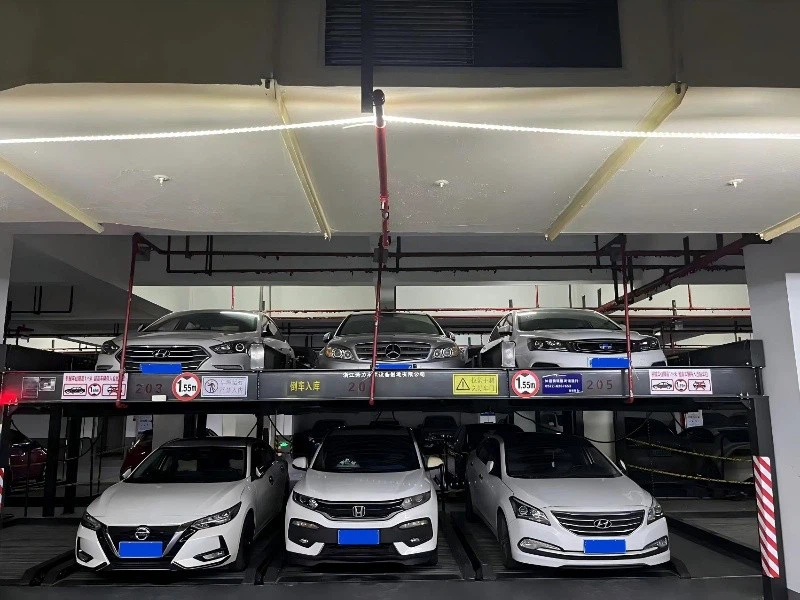
First off, let me give you a quick rundown of what Plate - Type Planar Shuttle Technology is. It's a pretty nifty system that's mainly used in parking solutions right now. For example, we've got the Two - Level Lift - and - Sliding Parking System For Jiexiu Residential Community, the Comb - Tooth Vertical Lift Multi - Level Parking System, and the Panel Vertical Lift Multi - storey Parking Structure. These systems use the plate - type planar shuttle to move vehicles around in a very efficient way, saving space and time.
But can this same technology be adapted for lunar missions? Well, let's look at the challenges of lunar missions first. The moon has a very different environment compared to Earth. There's no atmosphere, which means no air resistance, but it also means that there's no protection from solar radiation. The surface is covered in a layer of fine dust called regolith, which can be very abrasive and cause problems for mechanical systems. And the temperature variations are extreme, ranging from super cold at night to really hot during the day.
One potential use of Plate - Type Planar Shuttle Technology in lunar missions could be for moving equipment and supplies around on the lunar surface. On a lunar base, we'd need a way to transport heavy items like building materials, scientific instruments, and food and water supplies. The plate - type planar shuttle could be designed to move these things along a pre - laid track or grid system.
The efficiency of this technology is one of its biggest selling points. In a parking lot on Earth, it can quickly move cars from one spot to another, reducing the time it takes for people to park and retrieve their vehicles. On the moon, this same efficiency could be used to speed up the construction of a lunar base. Instead of having astronauts manually move heavy equipment, the shuttle could do it for them, saving time and energy.
Another advantage is the modularity of the system. In a parking solution, we can easily add or remove plates and shuttles depending on the size of the parking lot. On the moon, this modularity could be very useful. As the lunar base grows, we could expand the transportation system by adding more plates and shuttles.
However, there are also some major challenges to overcome. The regolith on the moon is a big problem. The fine dust can get into the moving parts of the shuttle and cause wear and tear. We'd need to design the shuttle with special seals and protective coatings to prevent the regolith from getting in.
The extreme temperature variations are also a concern. The materials used in the shuttle would need to be able to withstand both the cold and the heat without losing their structural integrity. We might need to use new materials or develop special insulation techniques to keep the shuttle functioning properly.
The lack of an atmosphere means that there's no way to cool the shuttle using air convection. We'd need to come up with a different cooling system, perhaps using a liquid coolant or a radiative cooling method.
In terms of power, on Earth, the parking systems are usually powered by electricity from the grid. On the moon, we'd need to find a reliable source of power. Solar power is an option, but it's not available at night. We might need to combine solar power with a battery storage system or some other form of energy storage.
Despite these challenges, I think there's definitely potential for Plate - Type Planar Shuttle Technology in lunar missions. The benefits of efficiency and modularity are too good to ignore. And with some innovative engineering, we could overcome the challenges posed by the lunar environment.
If you're involved in the space industry or have an interest in lunar missions, I'd love to talk to you about how our Plate - Type Planar Shuttle Technology could be adapted for your needs. Whether you're working on a government - funded lunar mission or a private space venture, we're here to help. We can work with you to design a customized solution that meets the unique requirements of the moon.
So, if you're interested in exploring this possibility further, don't hesitate to reach out. Let's start a conversation and see if we can make this wild idea a reality.
References
- "Lunar Surface Operations Handbook", NASA
- "Materials for Extreme Environments in Space", Journal of Space Engineering
- "Power Systems for Lunar Bases", International Journal of Space Science and Technology