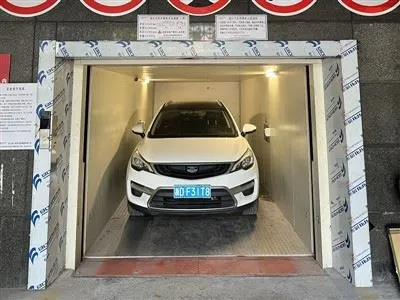
As a provider of Vertical Lift Parking Garages, I've witnessed firsthand the importance of proper ventilation in these innovative parking solutions. Vertical lift parking garages are a space - efficient alternative to traditional parking lots, but they come with unique challenges, especially when it comes to ventilation. In this blog, I'll delve into how a vertical lift parking garage handles ventilation and why it's crucial for the safety and functionality of the facility.
The Importance of Ventilation in Vertical Lift Parking Garages
Ventilation in a vertical lift parking garage serves multiple critical purposes. First and foremost, it helps to remove harmful pollutants such as carbon monoxide (CO), nitrogen oxides (NOx), and particulate matter generated by vehicles. These pollutants can pose serious health risks to both the users of the parking garage and the surrounding environment. High levels of CO, for example, can cause headaches, dizziness, and in extreme cases, even death.
Secondly, proper ventilation helps to control the temperature and humidity within the parking garage. Vehicles generate heat when they are running, and without adequate ventilation, the temperature inside the garage can rise to uncomfortable levels. High humidity can also lead to the growth of mold and mildew, which can damage the structure of the garage and pose health risks.
Ventilation Systems in Vertical Lift Parking Garages
There are several types of ventilation systems that can be used in vertical lift parking garages, each with its own advantages and disadvantages.
Natural Ventilation
Natural ventilation is the simplest and most cost - effective way to ventilate a vertical lift parking garage. It relies on the natural movement of air through openings in the garage, such as doors, windows, and vents. This type of ventilation works best in areas with a consistent wind pattern and mild climate.
In a vertical lift parking garage, natural ventilation can be enhanced by designing the garage with large openings at the top and bottom. The hot air generated by the vehicles rises and escapes through the top openings, while fresh air is drawn in through the bottom openings. However, natural ventilation may not be sufficient in areas with high traffic or in garages that are located in enclosed spaces.
Mechanical Ventilation
Mechanical ventilation systems use fans and ducts to move air in and out of the parking garage. There are two main types of mechanical ventilation systems: exhaust - only systems and supply - exhaust systems.
Exhaust - only systems work by extracting the polluted air from the garage and expelling it outside. These systems are relatively simple and cost - effective, but they may not provide sufficient fresh air to the garage. Supply - exhaust systems, on the other hand, not only extract the polluted air but also supply fresh air to the garage. This type of system provides better air quality and is more suitable for large - scale vertical lift parking garages.


Hybrid Ventilation
Hybrid ventilation systems combine the advantages of natural and mechanical ventilation. These systems use natural ventilation as the primary means of air exchange and mechanical ventilation as a backup or to supplement the natural ventilation when needed. For example, during periods of low wind or high traffic, the mechanical ventilation system can be activated to ensure adequate air circulation.
Design Considerations for Ventilation in Vertical Lift Parking Garages
When designing a vertical lift parking garage, several factors need to be considered to ensure effective ventilation.
Layout and Geometry
The layout and geometry of the parking garage play a crucial role in ventilation. The garage should be designed in such a way that air can flow freely through the space. This may involve creating open passages, avoiding dead ends, and ensuring that the parking bays are not too closely packed together.
Location of Vents and Exhausts
The location of vents and exhausts is also important. Vents should be placed in areas where they can effectively capture the polluted air, such as near the vehicle entrances and exits. Exhausts should be located on the roof or at a high point in the garage to ensure that the polluted air is expelled safely away from the building and the surrounding environment.
Airflow Calculations
Accurate airflow calculations are essential to determine the size and capacity of the ventilation system. These calculations take into account factors such as the number of vehicles, the size of the garage, and the expected traffic flow. By performing these calculations, we can ensure that the ventilation system is capable of providing adequate air exchange.
Our Solutions for Ventilation in Vertical Lift Parking Garages
As a provider of Vertical Lift Parking Garages, we offer a range of ventilation solutions to meet the specific needs of our clients. Our Standard Lift&Slide Parking System is designed with ventilation in mind. The system features a modular design that allows for easy installation of ventilation ducts and fans.
We also offer the 2 - Level Lift/Slide Parking System, which is suitable for smaller spaces. This system uses a combination of natural and mechanical ventilation to provide efficient air exchange.
For larger projects, our Two - Level Lift - and - Sliding Parking Device is a great option. It comes with a state - of - the - art ventilation system that can be customized to meet the specific requirements of the project.
Conclusion
Proper ventilation is essential for the safety and functionality of vertical lift parking garages. By understanding the importance of ventilation and choosing the right ventilation system, we can ensure that our clients' parking garages provide a safe and comfortable environment for both vehicles and users.
If you're interested in learning more about our vertical lift parking garages and our ventilation solutions, we invite you to contact us for a detailed discussion. Our team of experts is ready to assist you in finding the best solution for your parking needs.
References
- "Ventilation Requirements for Parking Garages," National Fire Protection Association.
- "Design Guidelines for Ventilation in Parking Structures," American Society of Heating, Refrigerating and Air - Conditioning Engineers (ASHRAE).