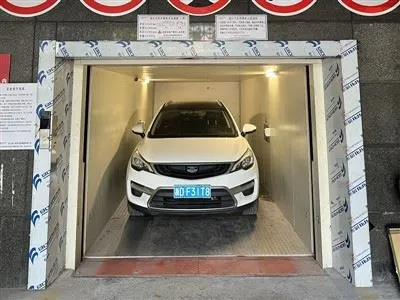
Is a Plate - Type Planar Shuttle Parking Garage energy - efficient?
As a supplier of Plate - Type Planar Shuttle Parking Garages, I've been frequently asked about the energy efficiency of our product. In this blog, I'll delve into the factors that determine the energy consumption of a Plate - Type Planar Shuttle Parking Garage and evaluate its energy - efficiency.


How Plate - Type Planar Shuttle Parking Garages Work
Before discussing energy efficiency, it's essential to understand how Plate - Type Planar Shuttle Parking Garages operate. These parking systems use a combination of shuttles and pallets to move vehicles within the garage. The shuttles transport the pallets with vehicles on them horizontally and vertically, allowing for efficient use of space.
The process starts when a vehicle drives onto a pallet at the entrance of the garage. The shuttle then picks up the pallet and moves it to an available parking space. When the vehicle is needed, the shuttle retrieves the pallet and brings it back to the entrance. This automated system maximizes the number of vehicles that can be parked in a given area.
Energy - Consuming Components
Several components in a Plate - Type Planar Shuttle Parking Garage consume energy. The most significant energy consumers are the shuttles themselves. These shuttles require power to move horizontally and vertically, and the energy consumption depends on factors such as the weight of the vehicle, the distance traveled, and the speed of operation.
Another energy - consuming component is the control system. This system manages the movement of the shuttles, monitors the parking spaces, and communicates with the users. The control system needs to be powered continuously to ensure the smooth operation of the garage.
Lighting is also an important factor in energy consumption. Adequate lighting is necessary for the safety and convenience of users, but it can contribute significantly to the overall energy usage of the garage.
Energy - Saving Features
Despite the energy - consuming components, Plate - Type Planar Shuttle Parking Garages are designed with several energy - saving features. One of the key features is the use of regenerative braking. When the shuttles slow down or stop, the kinetic energy is converted into electrical energy and fed back into the power grid. This reduces the overall energy consumption of the system.
The control system is also optimized for energy efficiency. It can adjust the operation of the shuttles based on the demand, reducing unnecessary movements and energy waste. For example, if there are few vehicles in the garage, the shuttles can operate at a lower speed, consuming less energy.
In addition, modern Plate - Type Planar Shuttle Parking Garages use energy - efficient lighting systems, such as LED lights. These lights consume less energy and have a longer lifespan compared to traditional lighting systems.
Comparison with Other Parking Systems
To evaluate the energy efficiency of Plate - Type Planar Shuttle Parking Garages, it's useful to compare them with other parking systems. For example, traditional surface parking lots require a large amount of land and do not use energy for vehicle storage. However, they are less space - efficient and may require additional energy for lighting and security.
High - Rise Puzzle Parking systems are another alternative. These systems use a vertical stacking mechanism to park vehicles, which can save space. However, they may consume more energy due to the complex mechanical movements involved.
The User - Friendly Design Of 3 - 4 Tier Lift - and - Slide Parking System is also a popular option. These systems use a combination of lifts and slides to move vehicles, but they may have limitations in terms of the number of vehicles that can be parked and the energy consumption for the lifting and sliding operations.
In comparison, Plate - Type Planar Shuttle Parking Garages offer a good balance between space utilization and energy efficiency. They can park a large number of vehicles in a relatively small area while using energy - saving features to reduce energy consumption.
Real - World Examples
There are many real - world examples of Plate - Type Planar Shuttle Parking Garages that demonstrate their energy efficiency. For instance, in a large commercial building, a Plate - Type Planar Shuttle Parking Garage was installed. The garage was designed to park over 500 vehicles, and it used regenerative braking and an optimized control system. As a result, the energy consumption of the garage was significantly lower compared to a traditional parking lot of the same capacity.
In another case, a hospital installed a Plate - Type Planar Shuttle Parking Garage to meet the parking needs of its staff and patients. The garage used energy - efficient lighting and a smart control system that adjusted the operation of the shuttles based on the time of day and the number of vehicles. This led to a reduction in energy costs and a more sustainable parking solution.
Conclusion
In conclusion, Plate - Type Planar Shuttle Parking Garages can be energy - efficient. Their design allows for efficient use of space, and the energy - saving features such as regenerative braking, optimized control systems, and energy - efficient lighting contribute to reducing energy consumption. When compared to other parking systems, they offer a good balance between space utilization and energy efficiency.
If you're considering a parking solution for your project, a Plate - Type Planar Shuttle Parking Garage could be a great option. Our company has extensive experience in providing high - quality Plate - Type Planar Shuttle Parking Garages, and we can customize the system to meet your specific needs. We invite you to contact us for more information and to discuss your procurement requirements.
References
- Research on Energy - Saving Technologies in Automated Parking Systems, Journal of Parking Technology
- Case Studies of Energy - Efficient Parking Garages, International Parking Institute