
From Provincial Planning to Local Legislation, Mechanical Parking Gains Policy Momentum
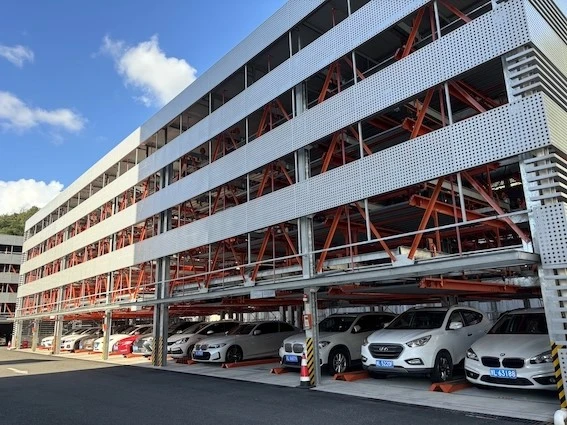
In 2026, China's mechanical parking industry is seeing stronger policy support across urban planning, project approvals, pricing mechanisms, land-use incentives, and industry standards. These developments are creating new opportunities for mechanical parking systems in urban renewal, existing parking facility upgrades, and high-density public infrastructure projects.
For property developers, parking operators, project owners, and mechanical parking equipment manufacturers, understanding these policy changes can help identify potential project opportunities and improve investment planning.
1. Shanxi Incorporates Parking Upgrades into Urban Renewal Planning
Shanxi Province has included mechanical parking and the conversion of flat parking lots into multi-level facilities in its urban renewal planning framework.
The provincial plan encourages the use of existing vacant land and other available spaces to increase parking capacity. It also highlights areas such as hospitals, schools, commercial centers, and transportation hubs as priorities for additional parking facilities.
This provides a policy basis for exploring mechanical parking solutions in existing urban spaces where conventional parking expansion may be difficult.
2. Local Legislation Encourages Mechanical Parking Development
Several cities are incorporating mechanical parking into local regulations.
Guangzhou's revised Parking Lot Regulations, effective February 1, 2026, provide planning-permit provisions for certain mechanical parking installations. Under specified conditions, installing mechanical parking equipment inside existing parking garages may not require a construction project planning permit.
Ankang's vehicle parking management regulations, effective October 1, 2026, also encourage eligible older residential communities and organizations to install mechanical parking facilities, subject to applicable safety and inspection requirements.
These measures reflect growing attention to mechanical parking as a practical option for addressing urban parking shortages.
3. Shenzhen Introduces a Dedicated Mechanical Parking Management Framework
Shenzhen implemented its Mechanical Parking Lot (Garage) Construction Management Measures on April 10, 2026.
The framework distinguishes between building construction projects and mechanical equipment installation projects. Under specified conditions and consultation procedures, certain projects-including equipment installation inside existing garages and qualifying above-ground facilities-can follow simplified approval procedures.
The measures also allow districts to introduce financial subsidies, particularly for older residential communities and urban villages. Additional provisions address advertising revenue and compensation where land is reclaimed for public-interest purposes.
This framework offers a more clearly defined administrative pathway for qualifying mechanical parking projects while maintaining requirements for construction, fire protection, equipment safety, and operation.
4. Parking Fees and Land Policies Support Different Investment Models
Local governments are also using pricing and land policies to influence parking development.
Guangzhou's parking service fee policy, effective September 1, 2026, allows eligible parking facilities with a sufficient proportion of mechanical parking spaces to apply an increased charging ceiling under specified conditions. The permitted increase is linked to the proportion of mechanical parking spaces and is subject to a maximum limit.
Yinchuan has adopted a different approach by placing underground and mechanical parking in a separate, relatively lower fee category in certain areas. Its urban renewal provisions also provide land-use support for eligible parking projects, including potential floor-area-ratio exemptions and land-price reductions.
Together, these approaches demonstrate how local policies can influence both the revenue potential and development costs of mechanical parking projects.
5. New Industry Standards Strengthen Smart Parking Development
At the 2026 China Urban Parking Industry Conference in Taiyuan on October 15, two industry standards were released:
- Technical Specifications for City-Level Smart Parking Platforms
- Evaluation Specifications for Smart Parking Operation and Service Management
These standards support more consistent technical requirements and service evaluation for smart parking platforms. As parking management becomes increasingly digital, interoperability, platform integration, and operational management are gaining importance across the industry.
6. Urban Renewal Projects Demonstrate the Value of Space Optimization
A recent parking project in Beijing's Xicheng District, reported by People's Daily on October 14, highlighted the use of previously underutilized land for parking development.
According to the report, the parking facility achieved approximately twice the parking capacity within the same land area. Noise control, charging facilities, and public-benefit parking spaces were also incorporated into the project.
This example illustrates the growing importance of efficient land use, environmental considerations, and user convenience in urban parking development.
What These Policy Developments Mean for Mechanical Parking
China's mechanical parking sector is receiving support through multiple policy channels. Planning initiatives encourage space optimization, local regulations clarify project approval procedures, pricing policies influence operating models, and industry standards support smart parking development.
For developers and parking operators, these changes create more opportunities to evaluate mechanical parking in new developments and existing facilities. Project feasibility still depends on local regulations, site conditions, safety requirements, and operating considerations.
As a mechanical parking equipment manufacturer, Comant continues to focus on mechanical parking systems, engineering solutions, manufacturing, and project delivery for residential, commercial, hospital, and public parking applications.

Alt: Mechanical parking systems supporting urban parking development in China


